Yusleep ReviewCan You Take YuSleep with Other Sleep Aids or Medicines?
Can You Take YuSleep with Other Sleep Aids or Medicines?

The short answer
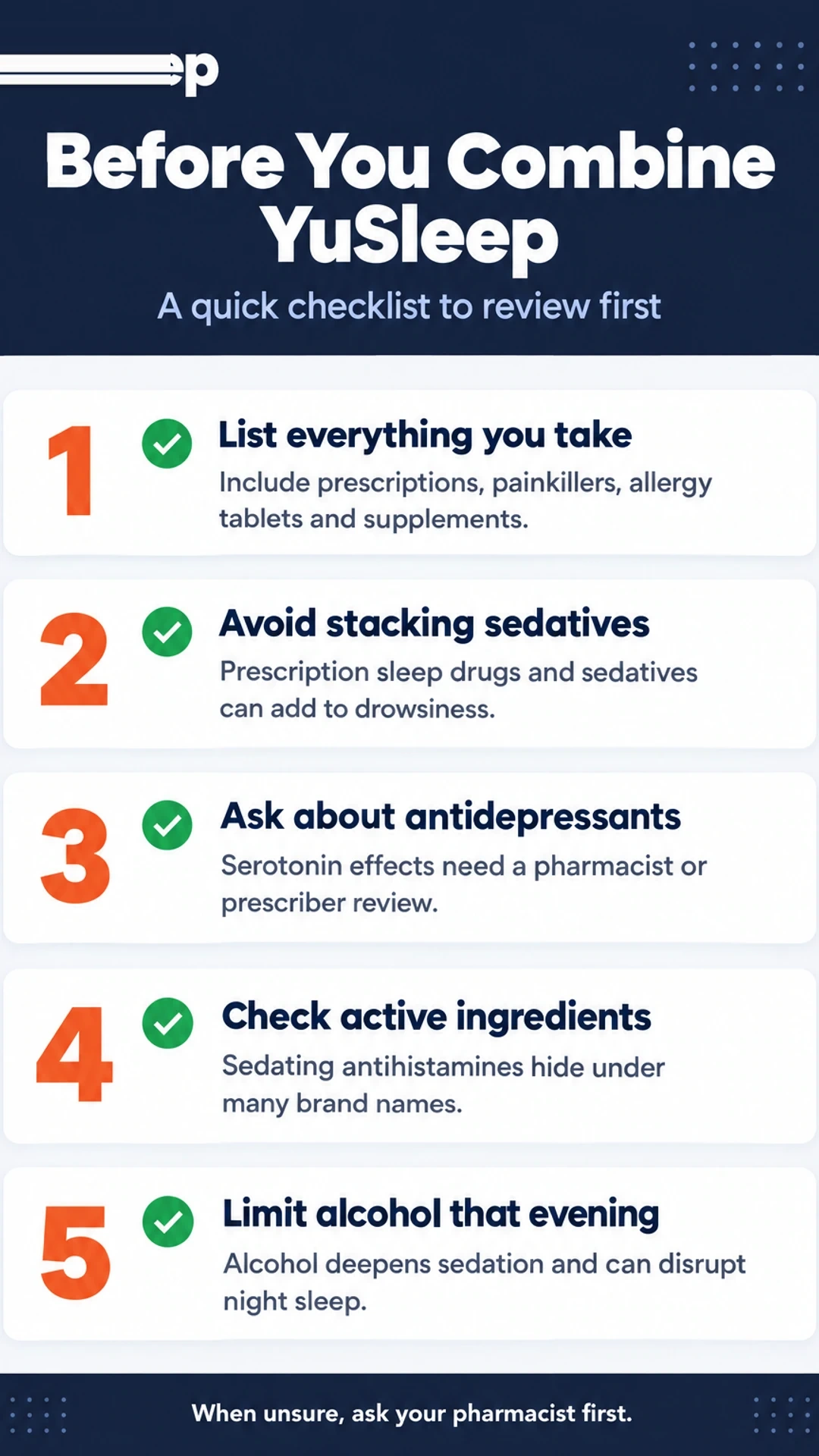
Combining YuSleep with other sleep aids, sedating medicines, antidepressants or alcohol can add to drowsiness or affect serotonin levels, so it should not be done without checking first. Avoid mixing it with prescription sleep drugs, alcohol and other sedatives unless a doctor says otherwise. Ask a pharmacist to review your full medicine list and the YuSleep label before taking both.
Some links on this site are affiliate links: if you buy through one, the site may earn a commission at no extra cost to you. More about this.
If you are already taking something for sleep, or a prescription for anxiety, pain, mood or allergies, you probably want a straight answer before you add anything new. Searching for one can leave you with vague warnings and no sense of which combinations actually matter. Our aim here is to give you a clearer picture of what to check and who to ask.
This guide is based on published specifications and what buyers report, not our own testing. Here is what the article covers:
- Common combinations to avoid: which types of sleep aids, sedatives and alcohol raise the risk of excess drowsiness.
- Antidepressants and serotonin: why this pairing needs a professional review.
- Reading the YuSleep label: which interaction and warning wording to look for.
- Questions for your pharmacist or doctor: what to bring and what to ask.
- Signs to stop and seek help: symptoms that mean you should not continue.
Read on for a practical checklist you can use before your next dose.
Why Combining Sleep Products Can Be Risky
Many sleep aids and sedating medicines work by slowing down the central nervous system, the part of the body that controls alertness. When two of these act on it at the same time, their effects can add up rather than simply sit side by side. A product that feels mild on its own may leave you groggy, unsteady or slow to respond when combined with another calming ingredient, a prescription sedative or even a couple of drinks.
Some sleep products also contain ingredients linked to serotonin, a chemical messenger involved in mood and sleep. People taking certain antidepressants should be especially careful here, because combining serotonin-related ingredients with these medicines can raise the risk of unwanted effects. If you take any medicine that affects mood, ask a pharmacist or your prescriber before adding a new product.
A common way people overshoot is by stacking similar ingredients from different products. You might take a sleep supplement, then a separate "night" formula that contains some of the same ingredients, and end up with a larger dose than either label intended. Read the ingredient lists on everything in your cabinet, and add up the amounts before you assume a combination is fine.
Older adults and people with liver or kidney conditions often clear these ingredients more slowly, so effects can last longer and be stronger than expected. Be particularly cautious if you wake up at night to use the bathroom or you need to be alert the next morning, since a higher effect can increase the chance of a fall. Anyone managing a chronic condition should check with a medical professional before combining anything.
Prescription Sleep Medicines and Sedatives
Combining any supplement with a prescription sleep medicine is the highest-risk situation on this page, so start there. If you already take a prescription for insomnia or anxiety, check with your prescriber or pharmacist before adding YuSleep or any other sleep aid.
Benzodiazepines and Z-drugs
Benzodiazepines (such as diazepam or lorazepam) and Z-drugs (such as zolpidem) both work by slowing the brain. Adding another sedating product on top can stack those effects, so you may feel far more drowsy than either would cause alone. Do not combine them without medical advice.
Other prescription sedatives and sedating antihistamines
The same caution applies to other prescription sedatives. Many over-the-counter allergy and cold products also contain sedating antihistamines such as diphenhydramine or doxylamine. These are easy to overlook because they are sold as ordinary medicines, yet they add to sedation in the same way.
Why next-day drowsiness is more likely
When sedating products are combined, the peak effect of each can overlap, and the effects can linger into the morning. This can affect how alert you feel while driving, using machinery, or even walking to the kitchen. If you notice unusual grogginess, stop the extra product and speak with a professional.
Should I change my prescription dose to fit a supplement?
No. Never adjust a prescription dose on your own to make room for a supplement. Whether a dose should change, and by how much, is a medical decision. If you are unsure how YuSleep fits alongside your current medications, ask your doctor or pharmacist before you take it.
Antidepressants and Serotonin Concerns
This is the interaction that matters most, so it is worth being direct about it. If you take an antidepressant, do not assume a sleep product is safe to add without checking first.
Selective serotonin reuptake inhibitors (SSRIs) and serotonin-norepinephrine reuptake inhibitors (SNRIs) raise serotonin levels in the brain. Some sleep ingredients can also affect serotonin pathways, so combining them can add to that effect. Before you take YuSleep with either type of antidepressant, look at the full ingredient list and ask a pharmacist or prescriber to review it. Check the label carefully and compare it against your medication list, not just the product name.
Monoamine oxidase inhibitors (MAOIs) are a stricter category. Because they interfere with how the body breaks down several neurotransmitters, mixing them with other products generally calls for clinician review before anything new goes in.
Serotonin excess is uncommon but serious. Seek urgent medical attention if you notice:
- Agitation, restlessness or confusion
- Rapid heartbeat or raised blood pressure
- Sweating, shivering or muscle twitching
- Dilated pupils, fever or diarrhoea
- Muscle rigidity or jerking
Do not stop or change an antidepressant to make room for a sleep product. Abruptly stopping can cause its own problems, and that decision belongs with your prescriber. If sleep problems or anxiety are the issue, talk to your doctor about the whole plan, since insomnia tied to depression is often best addressed together.
Over-the-Counter Medicines, Alcohol and Other Sleep Aids
Most of the trouble with combining sleep products comes from stacking sedating ingredients without noticing. Before you add anything to your bedtime routine, look at what is already in your cabinet, because many everyday products make people drowsy.
Can I take YuSleep with antihistamine sleep aids?
Be cautious here. Sedating antihistamines such as diphenhydramine and doxylamine are common in OTC sleep aids and in many cold and allergy medicines. Both cause drowsiness on their own, so taking them alongside any sleep product can deepen sedation and leave you groggy the next morning. Check the active ingredients on the label, not just the product name, since these antihistamines appear under several brand names.
Does alcohol make YuSleep stronger?
Yes, alcohol adds to sedation and can make sleep less restful, even when it helps you fall asleep faster. It can also worsen night waking as the drink wears off. Avoiding alcohol on the same evening is the simplest way to keep effects predictable.
Are painkillers and cold medicines safe to combine?
Some are, some are not. Many cold and flu products combine a painkiller with a sedating antihistamine, so read the full ingredient list. Plain acetaminophen or ibuprofen usually does not add sedation, but check with a pharmacist if you take several products at once.
Can I combine YuSleep with another melatonin or supplement?
Avoid stacking melatonin or other sleep supplements such as magnesium or L-theanine unless a pharmacist or doctor approves it. Doubling up makes it hard to know which product is doing what, and it can raise the risk of side effects.
Common sleep-related combinations and their main concern
| Combination | Main concern | Action |
|---|---|---|
| Prescription sleep medicines | Stacked sedation | Check with prescriber |
| Antidepressants | Serotonin effects | Pharmacist or prescriber review |
| Sedating antihistamines | Added drowsiness | Check active ingredients |
| Alcohol | Deeper sedation, poorer sleep | Avoid same evening |
| Other melatonin or supplements | Unclear dose overlap | Get approval first |
How to Check Before You Combine Anything
Most interaction problems are caught before they start, and the check takes about fifteen minutes. Start with a complete list. Include prescription medicines, over-the-counter painkillers, allergy tablets, antidepressants, and any vitamins, herbal supplements or other sleep products you take, including the ones you only use occasionally. People often forget the sleepy antihistamine they reach for during a bad cold, or a magnesium supplement taken for leg cramps.
Next, gather the labels. Bring the YuSleep label along with the labels for everything on your list to a pharmacist, or read the ingredient lists yourself and note any overlap. Pharmacists can check combinations against interaction databases in minutes, which is far more reliable than searching the internet for an answer.
When you speak to the pharmacist, ask about three things specifically:
- Sedation: Will the combined effects make you drowsy, slow, or unsteady the next morning?
- Serotonin: Does any ingredient or medicine affect serotonin, particularly if you take an antidepressant?
- Alcohol: Is it safe to drink on the same evening, and how much?
If the combination is cleared, ask how far apart the doses should be taken, and whether either dose should change. A pharmacist can also tell you whether a product's ingredients, such as caffeine in an evening drink, could undercut your sleep quality. Keep a written note of the answer. If something changes later, such as a new prescription, repeat the check.
Options for checking a combination
| Option | Pros | Cons |
|---|---|---|
| Pharmacist review | Checks against interaction databases | Requires bringing labels |
| Reading labels yourself | Quick and free | Easy to miss hidden ingredients |
| Asking your doctor | Covers medical history and full plan | May take longer to arrange |
Signs of Excess Sedation and When to Get Help
If you take any sleep product alongside another sleep aid, a prescription, or even a strong antihistamine, watch how you feel the next day and during the night. Combining sedating ingredients can add up in ways no single product would, and the effects are not always obvious at first.
Excess sedation is the most common concern. Stop and speak to a clinician if you notice:
- Excessive daytime drowsiness that affects work, driving, or your ability to stay alert
- Confusion, disorientation, or trouble remembering recent events
- Slowed or shallow breathing, or someone who is hard to wake up
Some medications can also raise serotonin levels. Symptoms that may point to serotonin excess include agitation, heavy sweating, a fast heartbeat, tremor, muscle twitching, or a high temperature. These symptoms need urgent medical care. Call emergency services or go to the nearest emergency department rather than waiting to see if they pass.
What should you do if symptoms appear?
Stop taking YuSleep and any other sleep aid or medicine you are combining with it, then seek medical advice. Do not restart anything until a clinician has reviewed the combination.
Keep a simple written record of everything you took: product names, ingredients, doses, and the times you took them. Include any alcohol, caffeine, or over-the-counter products. Bring this log to your doctor or pharmacist, since it makes it much easier for them to identify the cause.
Frequently asked questions
Does melatonin have drug interactions?
Yes. Melatonin can interact with blood thinners such as warfarin, with some diabetes medicines, with immunosuppressants, and with sedating drugs that add to drowsiness. Because interactions vary by product and dose, check the full ingredient list of any sleep aid against your prescriptions with a pharmacist before combining them.
What prescription drugs does valerian root interact with?
Valerian root may add to the effects of sedatives, sleep medicines, and alcohol, and it can increase drowsiness with antihistamines. It may also affect how the liver processes some drugs. Anyone taking prescription medicine, especially for anxiety, depression, seizures, or heart conditions, should ask a pharmacist or doctor before using valerian.
Are there any drug interactions between melatonin and Tylenol?
No significant interaction between melatonin and acetaminophen (Tylenol) is widely documented, and they are often taken together for pain and poor sleep. Taking either at the usual labeled dose is generally considered low risk for most adults. Check with a pharmacist if you take other combination cold or pain products that also contain acetaminophen.
What should you not take with sleeping pills?
Avoid alcohol, opioid pain medicines, muscle relaxants, and other sedatives or antihistamine sleep aids such as diphenhydramine. Combining them can cause excessive drowsiness, slowed breathing, confusion, and falls. Read labels for hidden sedatives, and confirm any combination with a pharmacist, since the risk depends on the specific drugs and doses.
Can you take YuSleep with other sleep aids or medicines?
The product's published information should be checked for its full ingredient list, since combining it with another sleep aid can stack sedating effects. Mixing it with alcohol, prescription sedatives, or medicines that cause drowsiness raises the chance of next-day grogginess. Ask a pharmacist or doctor before combining it with any other product, particularly if you take daily prescriptions.
Wrapping up
Combining sleep products is where most avoidable problems start, because sedating ingredients add together. Check every active ingredient across all products, including over-the-counter antihistamine sleep aids and alcohol. If you take prescription medicine, a pharmacist can review the full list in a few minutes. Which combinations have you had questions about? Share them in the comments.